By Hala Alsalman
Some 4000 years ago, a prince in southern Mesopotamia named Gudea had a dream:
The god Ningirsu visited him with a command to build a temple,
revealing a detailed architectural plan.
Gudea not only made it happen; he also had the plan integrated into a famous statue that now stands at the Louvre, thanks to archeologists and Mesopotamians who preserved artifacts from their own ancient past.
By Hala Alsalman
Mesopotamian people would often encounter ruins from previous eras when preparing building foundations, which they regarded as divine interventions from the past to be honored in public rituals of reburial.
The future would also intercede with their present in prophetic dreams, like Gudea’s, that were either spontaneous or induced, a practice developed in Babylonian oneiric (dream) scholarship. Time travel, in this sense, was real for Mesopotamians, and is the basis for my MFA project “Remember the Future: Oneiric Artifacts from Mesopotamia” (2024).
“Could dreaming be a methodology for excavating possible futures?”
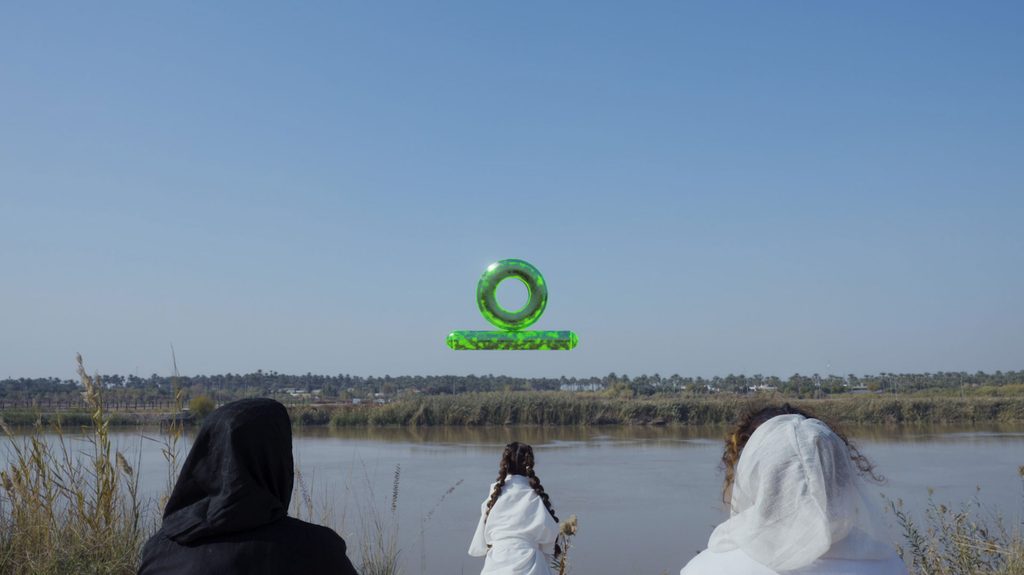
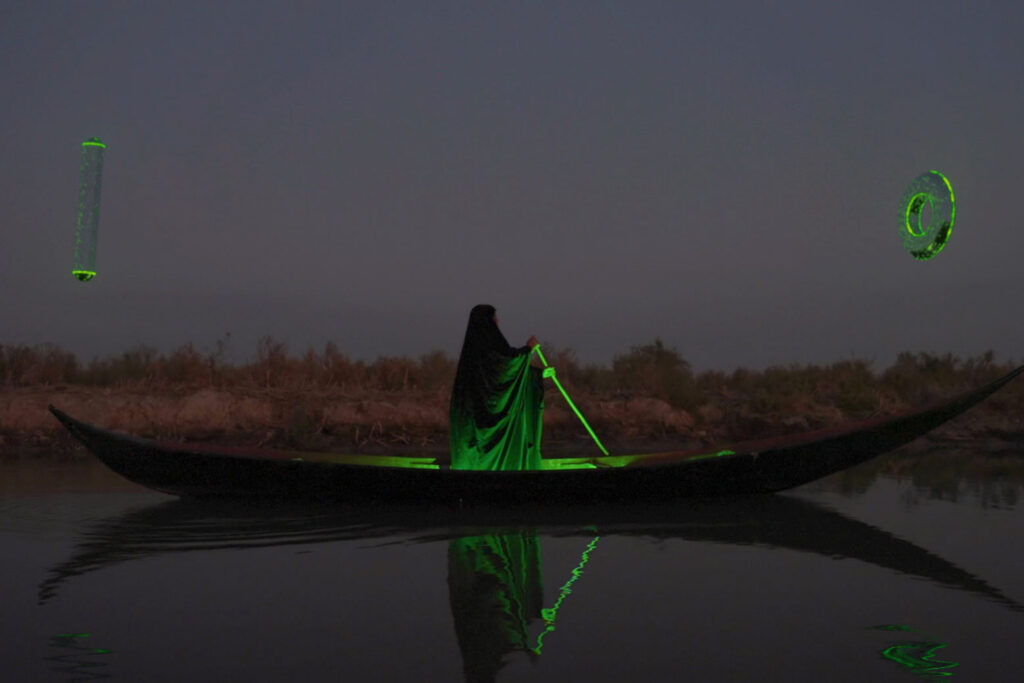
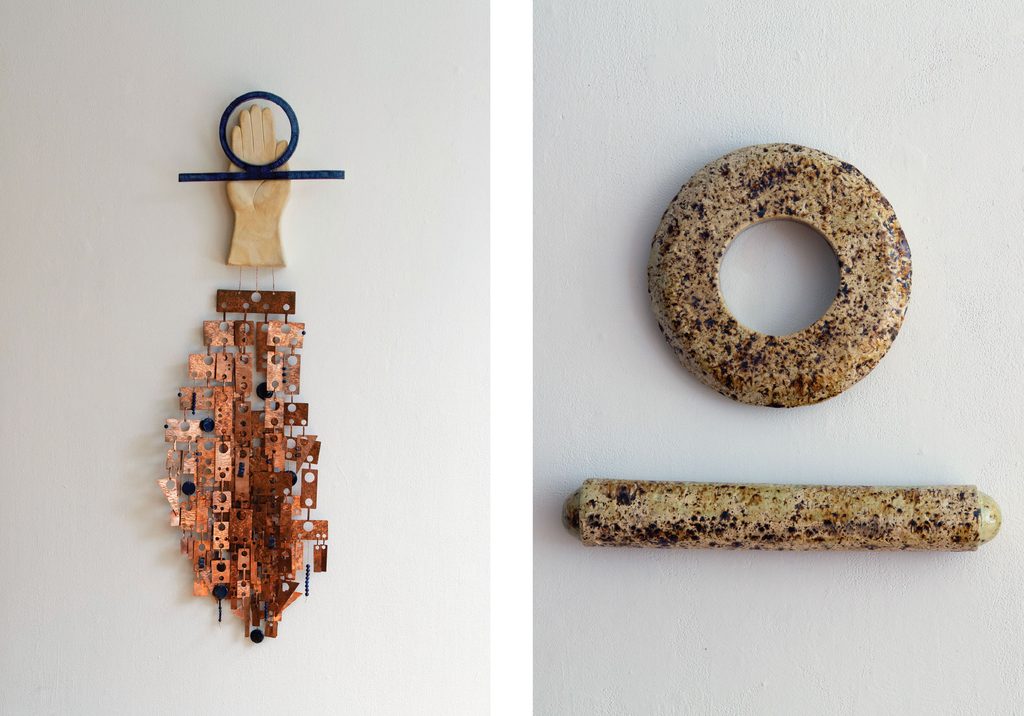
The intention of my thesis research was to find lost ancient wisdom that could reemerge in a time ahead. My attention kept coming back to the rod and ring motif – a mysterious yet potent symbol – so I decided to explore it through the language of clay and oneiric moving images captured across Iraq. Could dreaming be a methodology for excavating possible futures? For Gudea and the ancients, it seems so.