“They have sown the wind, and they shall reap the whirlwind”
– Hosea 8:7
Introduction
The essence of human existence is built upon the foundations of cultivation. It shaped civilisations, transforming men from primitive savage demons into civilised human beings. Hence, cultivation or farming was considered to be a noble profession. Regrettably, the recent history of cultivation around the world has reversed the “demonic mentality” of ancient men. Until recently, people viewed farming as a sacred act, but modern scientific cultivation techniques in the second half of the 20th century accelerated human greed and gradually led us into the snare of pesticides. Hence, this dramatic change was neither the result of the green revolution nor globalisation, but what British philosopher Kate Soper calls ‘shortsighted human greed’. This greed mentality began to emerge with the growth of wealth in the 19th century, based on the destruction and consumption of forests and wildlife. Gerrard argues in his work Ecocriticism that “America’s rapidly growing wealth in the nineteenth century was based on destruction and consumption of forests and wildlife so astonishingly voracious that, in places, it amounted to an ‘ecocidal’ campaign to exhaust and refashion whole habitats” (Gerrard 2004: 84). The ecological imperialism that emerged in America was a sign of an inevitable doom. Gradually, the ‘ecocidal mentality’ was imprinted in the history of mankind along with his greed. It was this quest for ‘more’ that forced mankind to dig the land right under their foot. When men destroyed natural resources, there was a scarcity of essential things like food and habitat. As the smartest species on the planet, men always had solutions to such issues; men found new dwelling places by destroying the forests and levelling hills. In the same way, when crops were destroyed by the insects, men invented ‘pesticides’ to kill them. Initially, the harm of pesticides was minimal, but when insects gained immunity against such chemicals, the intensity of those chemicals proportionately increased. Men never thought that this evolving form of pesticide would lead them into a field of death. So, the history of pesticides emerges in such a complex trajectory of mankind. The mindset of modern men, especially farmers, merged with modern scientific cultivation techniques, accelerated their greed for wealth. That is how modern scientific cultivation techniques slowly led mankind into the valley of death. In this context, Rachel Carson admonishes in her magnum opus, Silent Spring, that “it is ironic to think that man might determine his own future by something so seemingly trivial as the choice of an insect spray” (Carson 1962:13).
Therefore, in this paper, I attempt to trace the cultural and political implications of the Endosulfan tragedy that occurred in a district called Kasaragod in Kerala (a small state in the southern part of India) by using the selected photographs taken by Mr. Madhuraj, Photo Editor of a leading Malayalam publications called ‘Mathrubhumi’ in relation with key concepts from the book Silent Spring by Rachel Carson.
The history of pesticide use and its implications in Kasargod.
India holds the second-largest agricultural land in the world, with 20 agro-climatic regions and 157.35 million hectares of land under cultivation. As one of the most populous and agrarian nations, India was at the forefront of the Green Revolution. It is interesting to note that India became one of the forerunners of this revolution not because of its rich and diverse agrarian culture but due to the severe food shortage that destroyed the country soon after its independence. The country was importing food grains from other countries through various programs, and US aid was one among them. It was one of the faces behind such an agency, William S Gaud of the United States Agency for International Development (USAID) in 1968 first coined the term ‘Green Revolution’ to denote the introduction of new technology and policies implemented in the developing nations with aid from industrialised nations between the 1940s and the 1960s to increase the production and yield of food crops. Hence, the 1960s are considered to be a golden era in modern Indian history. During this period, India witnessed revolutionary changes in the agricultural sector as a result of the ‘Green Revolution’, which eventually led the country to be a self-reliant agrarian nation. Therefore, the Green Revolution brought peace and prosperity on one side, but on the other, it has an unknown history of peril and plight. With the advent of the ‘Green Revolution’, the notion of pesticides became more popular among farmers in India. Until the arrival of this modern revolution, farmers mainly produced for subsistence, but the Green Revolution changed the face of traditional cultivation and the attitude of farmers in India. It was during the 1960s that the Kerala Agricultural Department established a cashew plantation on 12,000 acres of land in Kasargod. After a few years, the ‘Tea mosquito bug’ began to attack the crops, and the department decided to use handpump spraying of pesticides to prevent the insect menace in the area. The initial phase of pesticide use in Kasargod involved the use of Endrin as the primary pesticide. In 1978, the Kerala Agricultural Department handed over this plantation to Kerala Plantation Corporation. Initially, the Kerala Plantation Corporation used the same pesticide, and later, the quest for surplus yield and money forced them to use pesticides. The shift in ownership power from a government-managed department to a corporate model system transformed the entire system of operations, including the daily routine of farmers. When the mode of operations changed from traditional methods to modern techniques, the corporation began to use ultra-modern pesticides by using advanced methods, and that is how they ended up in helicopter spraying. Rachel Carson writes, “The history of life on earth has been a history of interaction between living things and their surroundings” (Carson 1962: 12). When the Kerala Agricultural Department decided to plant cashew trees on 12,000 acres of land in various panchayats across Kasargod, everyone thought, as Rachel Carson points out, they were revitalising the history of life by planting cashew trees for a hopeful future. They were indeed planting a bright future under the shade of greed. The image of a helicopter in a third-world nation’s large cashew garden is contradictory, highlighting the intrusion and presence of ultra-modern artificial equipment in a balanced environmental setting. This machine sprayed pesticides like a ‘rain of death’ across 11 panchayats in the Kasargod district. The reckless spraying of endosulfan transformed the area, once a cradle of life, into a ditch of death. The following images from different areas in Kasargod reflect the severity of the aftereffects of endosulfan in the Kasargod district.

Fig 1. Kavitha of Pallathadka in Badiyadka. She had a medical condition of ‘protruded tongues’, and she died in 2010.
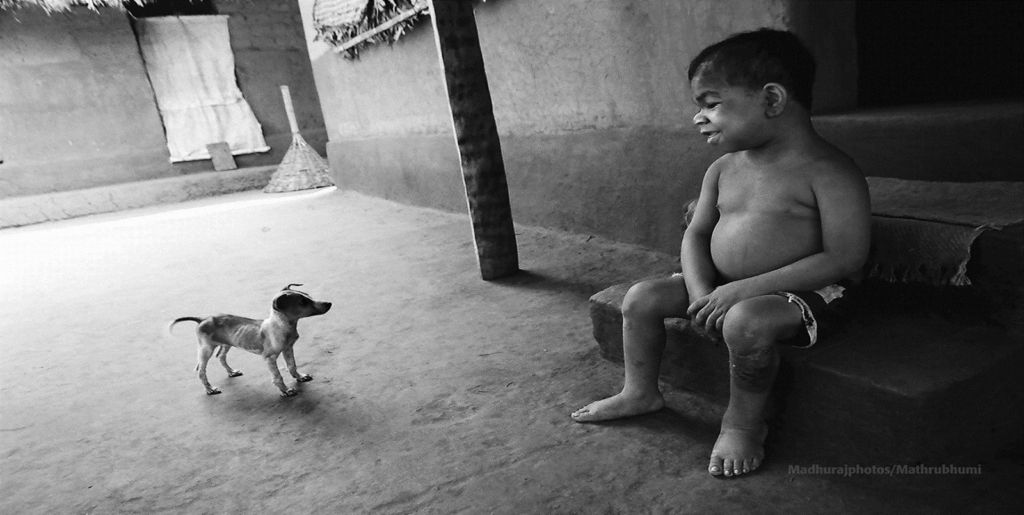
Fig 2. Narayana Naik of Enmakaje Panchayath, when this photo was taken in 2001, then he was more than 20 years old.
These images remind spectators about a loop of evils that occurred over a period of time, but in the light of Rachel Carson’s words, “in the modern world there is no time. The rapidity of change and the speed with which new situations are created follow the impetuous and heedless pace of man rather than the deliberate pace of nature” (Carson 1962:12). Time is an integral aspect of our existence, but in a globalised world, the notion of time and seasons has been destroyed by the greed of men. The quest for new markets and profits led us into the snare of chemical poisons. The terrible aftereffects of the Endosulfan tragedy began to appear in Kasargod in the 1980s; the first sign of this tragedy was visible in the small rivulets near the plantation areas where dead fish littered the shores. Gradually, bees, frogs, and fish began to disappear from the area. These were warning signs of the silent spring’s impending arrival. Poisonous and extremely dangerous pesticides found their way into the hands of ignorant and innocent men in Kasargod, forcing them to unknowingly set up a death trap for every living thing. Rachel Carson writes, “I do contend that we have put poisonous and biologically potent chemicals indiscriminately into the hands of persons largely or wholly ignorant of their potentials for harm. We have subjected enormous numbers of people to contact with these poisons, without their consent and often without their knowledge” (Carson 1962:15).
This is how they sow the wind of poison with their bare hands, only to reap the whirlwind of plight and death. People used to gather in awe when the helicopter sprayed Endosulfan across plantations in Kasargod, unaware of its harmful effects. Carson beautifully portrays the contradiction between this sight and the rain of death when she observes, “although today’s poisons are more dangerous than any known before, they have amazingly become something to be showered down indiscriminately from the skies” (Carson 1962: 85). The irony is that the same tool, the helicopter that brought wings to their dreams, crushed their lives completely. And people who were expecting a rain of prosperity were met with a rain of perils and plights.
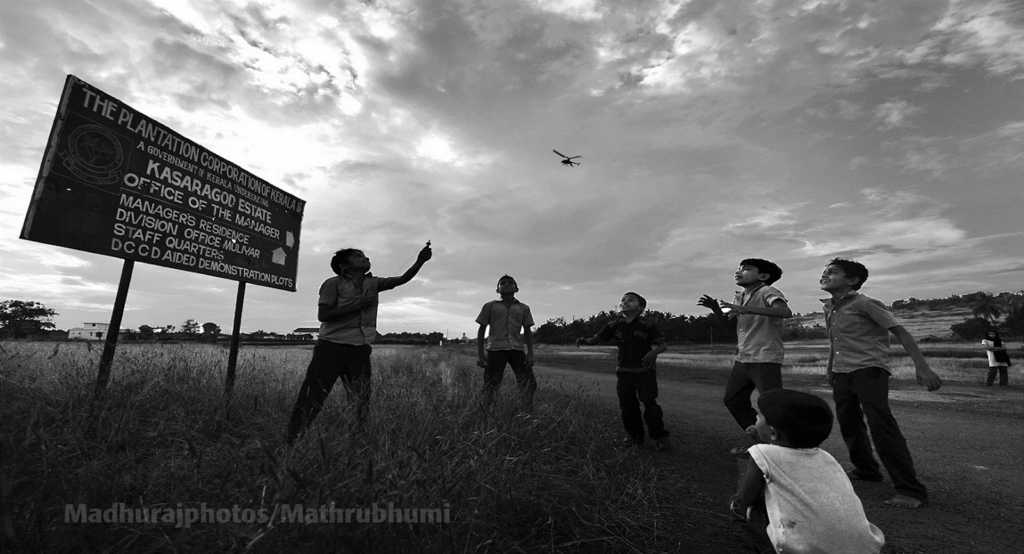
Fig 3. Children playing with a toy helicopter near the PCK building at Muthalapara, Bovikanam.
Though maladies and environmental issues were common in these areas of Kasargod due to Endosulfan use, the helpless and innocent villagers interpreted these tragedies in terms of religion by saying that it was the curse of God, Jatadhari, a local deity who is believed to be an incarnation of Lord Shiva. Not only in India but all over the world, the notion prevails that ‘nature’ is God’s tool to give us rewards and punishments based on our deeds and words. Villages in Kasargod perceived all those maladies as the merciless face of Jatadhari. In Kasargod’s rural areas, people are extremely attached to the notion of land. They believe that their land will not cheat them; only men can do that. To elaborate on how Naziz combined racial purity with agricultural and land-based policies, British historian Anna Bramwell uses two powerful terms, ‘Blut und Boden’, blood and soil. Drawing on these two potent terms, I argue that the people in Kasargod believed that natural soil pollution also contaminated their blood. Blood cannot exist without land. Humans need a piece of land to live in harmony with nature. Without protecting it, they are digging their own grave. When Kasargod’s ‘boden’ or soil was polluted with chemicals, naturally, their blood was also contaminated. Finally, using the example of ‘blood,’ I posit that blood plays a crucial role in our relationships and resistance. People define revolutions and struggles by referring to the colour red, the colour of blood. I contend that no one understands the value of ‘blood’ better than a mother, because her children are her blood. The following images are stark reminders of a group of mothers who revolt against the system to save their ‘blood’.

Fig 4. Mothers traveling to Trivandrum to participate in a hunger march in Thiruvananthapuram (State Capital).
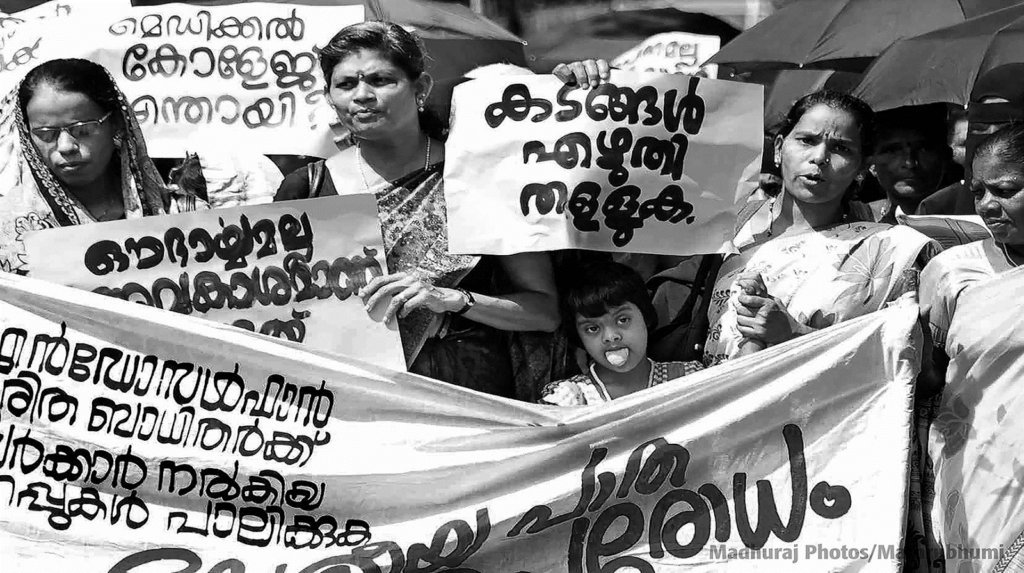
Fig 5. Mothers protesting in front of the civil station in Kasargod.

Fig 6. Mothers, along with their children, are protesting in front of the civil station in Kasargod.
All these images of protests against Endosulfan portray mothers and their children at the forefront. In 1995, a woman named Leelakumari Amma first submitted a petition to the Kanhangad Munsiff Court to halt the spraying of Endosulfan, thereby elevating the issue to a new level by attracting statewide media coverage. The prolonged fight for Endosulfan victims’ rights began with the advocacy of a single woman. This struggle for justice for Endosulfan victims expanded into a massive protest in the 2000s under the banner of anti-Endosulfan movements. This protest was a collective effort by various small groups who united for the common cause of ‘justice’ for Endosulfan victims. Though they began their protest in the early 2000s, it was in 2004 that Endosulfan Samara Samithi led a march towards the collectorate, and this incident played a key role in bringing their struggle for justice into the national arena. As Rachel Carson points out, “When the public protests, confronted with some obvious evidence of damaging results of pesticide applications, it is fed little tranquillising pills of half-truth” (Carson 1962:15). In a diverse nation like India, it is easy to buy people, but it is very hard to barter ‘truth’, and that is the reason the fight for justice for these Endosulfan victims lasted over two decades, because every time the intensity of their fight was tranquillised by multinational pesticide manufacturers by spreading false narratives and corrupting the system. Finally, after two decades of relentless agitations and demands of these victims, on 13 May 2011, the Supreme Court of India banned the production, sale, and use of Endosulfan in India.
Conclusion
The mothers of the victims played a crucial role in elevating their voice against the use of pesticides in India. I would argue that these images of helpless mothers are metaphors for a weeping ‘Mother Earth’, and this tragedy is only a microcosm of the larger problem the world is currently grappling with. Bill McKibben argues in The End of Nature that “we have changed the atmosphere, thus we are changing the weather. By changing the weather, we make every spot on earth manmade and artificial. We have deprived nature of its independence, and that is fatal to its meaning. Nature’s independence is its meaning” (McKiben 1990: 54). Given this argument, I argue that the use of pesticides in Kasargod has transformed the land and these mothers into repositories of poison, stripping them of their inherent autonomy. Consequently, the land and the mothers have forfeited their biological significance, much like the modern, polluted planet Earth. Finally, considering all these contemporary ecological issues, the question arises as to whether nurturing Mother Earth will remain a memory or a reality. Lewis Thomas argues that “We are the planet’s awareness of itself; if we do it right, we have a very long way to go” (Thomas 1982, p.52). That means we still have hope; although modern men inherit a history that H. G. Wells describes as a “race between education and catastrophe” (Wells 1920: 608), we are human beings, hope endures as long as humanity survives, and it is the duty of every man to shoulder the responsibility to nurture nature with empathy and sympathy for a better and brighter future.
Acknowledgement
I would like to thank Mr Madhuraj, Photo Editor of Mathrubhumi Periodicals, for allowing me to use his images in this article
References
Baker, CJ. ‘Frogs and Farmers: The Green Revolution in India, and Its Murky Past’. in Bayliss-Smith T, Wanmali S(eds), Understanding Green Revolutions: Agrarian Change and Development Planning in South Asia, Cambridge: Cambridge University Press, pp.37-52.
Brown, LR (1969), Seeds of change. The Green Revolution and development in the 1970’s. London: Pall Mall Press.
Carson, Rachel (1962), Silent Spring, Greenwich: Crest Reprint Fawcett Publications.
Clasen, B, Murussi, C., and Storck, T (2019), ‘Pesticide contamination in Southern Brazil’, in L. M. Gómez-Oliván(ed), Pollution of Water Bodies in Latin America, Cham: Springer, pp.43-54
Gerrard, Greg (2004), Ecocriticism. New York: Routledge.
McKiben, B (1990), The End of Nature. London: Penguin.
Misra Savy, Soumya, & Joshi, Sopan. 2017. Tracking Decades-Long Endosulfan Tragedy in Kerala. Down to Earth. www.downtoearth.org.in/health/tracking-decades-long-endosulfan-tragedy-in-kerala-
Nelson, A. R. L. E., Ravichandran, K., and Antony, U. (2019). The impact of the Green Revolution on the indigenous crops of India. Journal of Ethnic Foods, 6:1. Pp.1-10, doi: 10.1186/s42779-019-0011-9.
Wells, H. G (1920), The Outline of History: Being a Plain History of Life and Mankind. London: The Waverley Book Company Limited.Thomas, L (1982). “Are We Fit to Fit In?”. Sierra, 67:2, pp.49–52.